
Overview
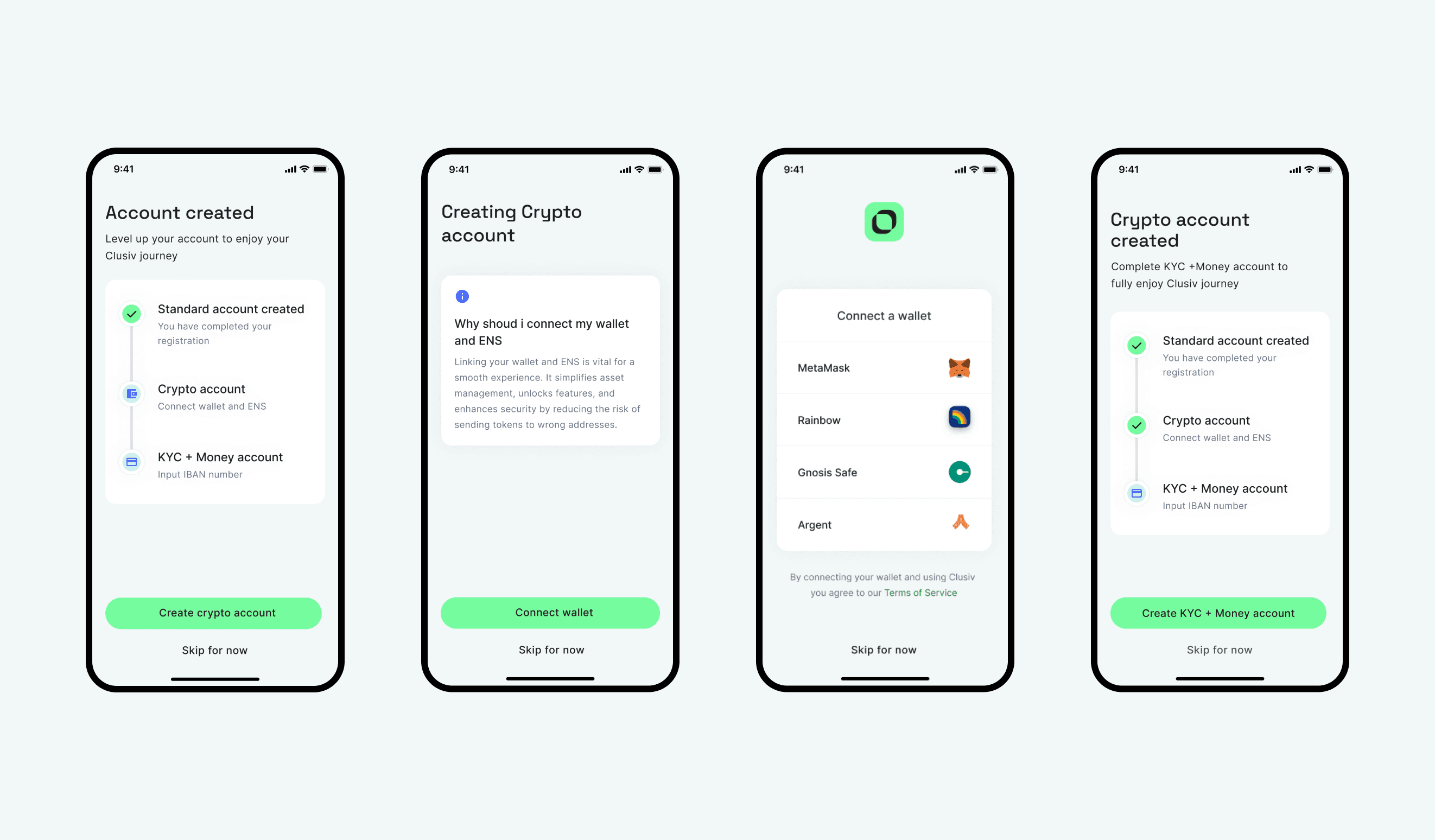
In 2022, a group of Founders and Veteran Leadership asked us to design and build an exciting Web3 App that unified identity management, transactions, and communications services in one place.
Built around security, agency, and discretion, the app empowers users to control their identity, communications, and transactions through a decentralized peer‑to‑peer network. It supports native crypto payments for professional communities, paid content, and personal use, with an intuitive UI/UX that lowers the barrier to adoption.
At its core, it’s a simple app owned and cared for by its users.

"Logo ideas are great, we want to enable sealed communities. So almost closed C -letter is cool idea IMO."


The Web3 Messaging Bottleneck
Web3 growth is bottlenecked by the lack of a native messaging protocol. Currently, apps rely on non-native platforms like Discord and Telegram, meaning wallet addresses aren't linked to chat identities. This forces developers to rely on airdrops—a novel form of spam—for user awareness, while making standard features like product notifications, customer support, and peer-to-peer messaging impossible in a crypto-native way.
Workarounds like linking emails or using AI to match profile pictures are clever but sub-optimal. Every major software era has been defined by its own messaging protocol (IRC, SMS, WhatsApp). Web3 needs its own. A native protocol will unlock billions of private messages, streamline user onboarding, and provide the essential communication infrastructure that startups and consumers need to thrive.


Zero Data Dark Patterns. Total User Agency.
The product does not treat users's data as a monetisation vector. Instead, we’ve designed the data architecture so users own the master switch. Through progressive disclosure, users control the visibility states of their identity—deciding exactly what to share, when it’s exposed, and when it stays hidden.
The UX scales at ease from personal to community communications. Users are in control of their communities and content.
Messaging has become the bottleneck for growth in web3. The lack of a native messaging protocol prevents apps from communicating with their users. Today, web3 apps communicate with users on Discord & Telegram. But these social networks aren’t web3 native. My Telegram username isn’t linked to my wallet. Knowing a chat user is the same who bought an NFT remains elusive but important. These communities don’t help new app developers with user awareness. So developers stuff wallets full of airdropped tokens. They hawk their wares by stuffing them into strangers’ pockets, which is problematic. These airdrops are a novel form of spam for both users & wallets. The problem extends beyond marketing & community building. Product notifications (your NFT has a new offer), customer support (here’s how to transfer your tokens into our liquidity pool), and peer-to-peer messaging within an application (hey, friend) - none are possible today in a crypto-native way. Products work around this limitation by linking existing communication systems to wallet addresses like email addresses, or Discord & Telegram handles. Some use machine learning to identify profile pictures across services to canonicalize user identities - no doubt clever. But these are sub-optimal because the underlying problems remain. Every new software era has its messaging protocol. IRC in the 1980s. Instant messenger in the 1990s. SMS in the 2000s. WhatsApp, Telegram in the 2010s. There will be a new messaging protocol native to the web3 era. When web3 messaging arrives, consumers will send billions of private messages to each other. Users inviting others will welcome the next hundred million users to web3. Applications won’t trail far behind sending product, marketing, & support messages. Messaging protocols are oxygen for startups & consumers alike. It’s time web3 had its own.

